How Does the Indexing System of Major Search Engines Operate?
Introduction
Search engines like Google, Bing, and Yahoo use advanced indexing systems to organize and display billions of web pages in search results. Indexing is one of the most important processes in SEO because a page must first be indexed before it can appear on search engine results pages (SERPs).
Understanding how search engine indexing works can help website owners improve visibility, increase organic traffic, and optimize their websites more effectively.
What Is Search Engine Indexing?
Search engine indexing is the process of collecting, analyzing, and storing information from web pages in a search engine database. Once a page is indexed, it becomes eligible to appear in search results when users search for relevant keywords.
Think of the index as a massive digital library where search engines organize website content for quick retrieval.
How Search Engines Discover Websites
Before indexing happens, search engines must first discover web pages through a process called crawling.
Search engines use automated bots known as:
- Googlebot (Google)
- Bingbot (Bing)
- Slurp (Yahoo)
These bots scan websites by following links from one page to another.
Search engines discover pages through:
- Internal links
- Backlinks from other websites
- XML sitemaps
- Submitted URLs in Google Search Console
If a page cannot be discovered, it may never get indexed.
The Crawling Process
Crawling occurs when search engine bots visit a webpage and analyze its content.
During crawling, bots examine:
- Page titles
- Headings
- Text content
- Images
- Links
- Meta tags
- Structured data
Search engines also evaluate:
- Mobile friendliness
- Page speed
- Website structure
- Security (HTTPS)
Pages with poor accessibility or technical issues may not be crawled properly.
What Happens During Indexing?
After crawling, search engines process the collected data and decide whether the page should be added to the search index.
Search engines analyze:
- Content quality
- Keyword relevance
- Originality
- User experience
- Technical SEO factors
If the page meets quality standards, it is stored in the index and becomes searchable.
However, some pages may not be indexed because of:
- Thin content
- Duplicate content
- Noindex tags
- Broken pages
- Poor website structure
Factors That Affect Indexing
Several SEO factors influence whether search engines index a page successfully.
1. Website Structure
A clean website structure helps bots navigate pages efficiently. Proper internal linking allows search engines to discover important content quickly.
2. XML Sitemap
An XML sitemap provides search engines with a list of important URLs on your website. Submitting a sitemap through Google Search Console can improve discovery and indexing.
3. Content Quality
High-quality, original, and informative content has a better chance of being indexed and ranked.
Avoid:
- Duplicate content
- Auto-generated content
- Thin pages with little information
4. Mobile Optimization
Major search engines prioritize mobile-friendly websites. Pages that perform poorly on mobile devices may experience indexing issues.
5. Page Speed
Fast-loading websites improve user experience and help search engine bots crawl pages more efficiently.
Difference Between Crawling and Indexing
Many beginners confuse crawling and indexing.
- Crawling = discovering and scanning pages
- Indexing = storing pages in the search engine database
A page can be crawled but still not indexed if search engines determine it lacks value or has technical issues.
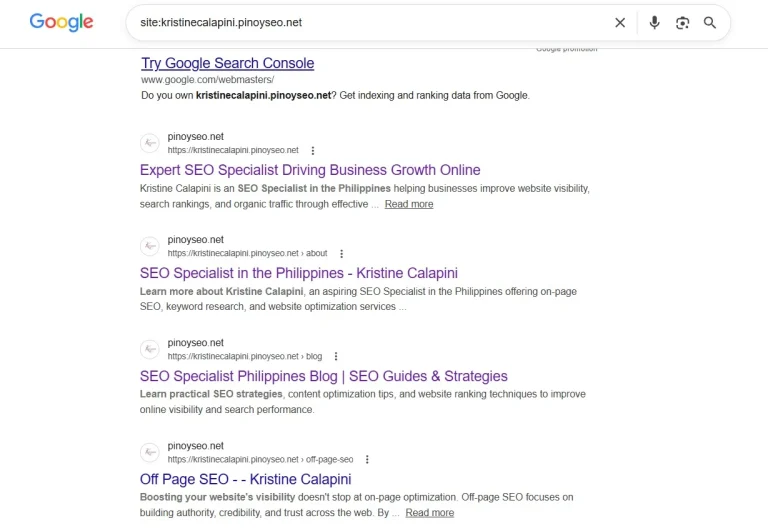
How to Check if Your Page Is Indexed
You can check whether a page is indexed by searching:
site.com/page-url
Example:
site:kristinecalapini.pinoyseo.net
You can also use Google Search Console’s URL Inspection Tool for more accurate indexing information.
How to Improve Website Indexing
Here are some practical ways to improve indexing:
- Create high-quality content
- Use proper internal linking
- Submit XML sitemaps
- Optimize website speed
- Make pages mobile-friendly
- Fix broken links
- Avoid duplicate content
- Request indexing through Google Search Console
Regularly publishing blog content also encourages search engines to crawl websites more frequently.
Why Indexing Matters for SEO
If your website pages are not indexed, they cannot rank in search results or generate organic traffic.
Proper indexing helps:
- Increase online visibility
- Improve keyword rankings
- Drive website traffic
- Support long-term SEO growth
For businesses and SEO professionals, understanding indexing is essential for building a successful online presence.
Conclusion
Search engine indexing is the foundation of SEO. Major search engines use bots to crawl, analyze, and organize web pages into massive indexes that power search results.
By optimizing website structure, content quality, and technical SEO, website owners can improve their chances of getting indexed and ranking higher in search engines.
If you want your website to appear in search results consistently, focusing on proper indexing and SEO best practices is essential.

I’m Kristine Calapini, a beginner SEO Specialist passionate about helping businesses improve their online visibility through SEO, content optimization, and website improvements. I continuously learn and apply SEO best practices to support organic growth and better search engine performance.